Entanglements, 2026
“Entanglements” is a new multi-part commission that explores the histories embedded in the landscape and architecture of Boston, MA. The first site-specific installation opening this fall, “Stone Map (Ruttier for the Dispossessed),” is an earthwork composed of monolithic stones situated on Copp’s Hills Terrace in the city’s North End. The installation lies at the heart of the former New Guinea settlement, one of the first Black communities in Boston; and is adjacent to Copp’s Hill Burying Ground, where over 1000 Black Bostonians are buried in unmarked graves. Among the unmarked graves are believed to be Phillis Wheatley Peters, the first Black woman to publish a book of poetry, and her child.
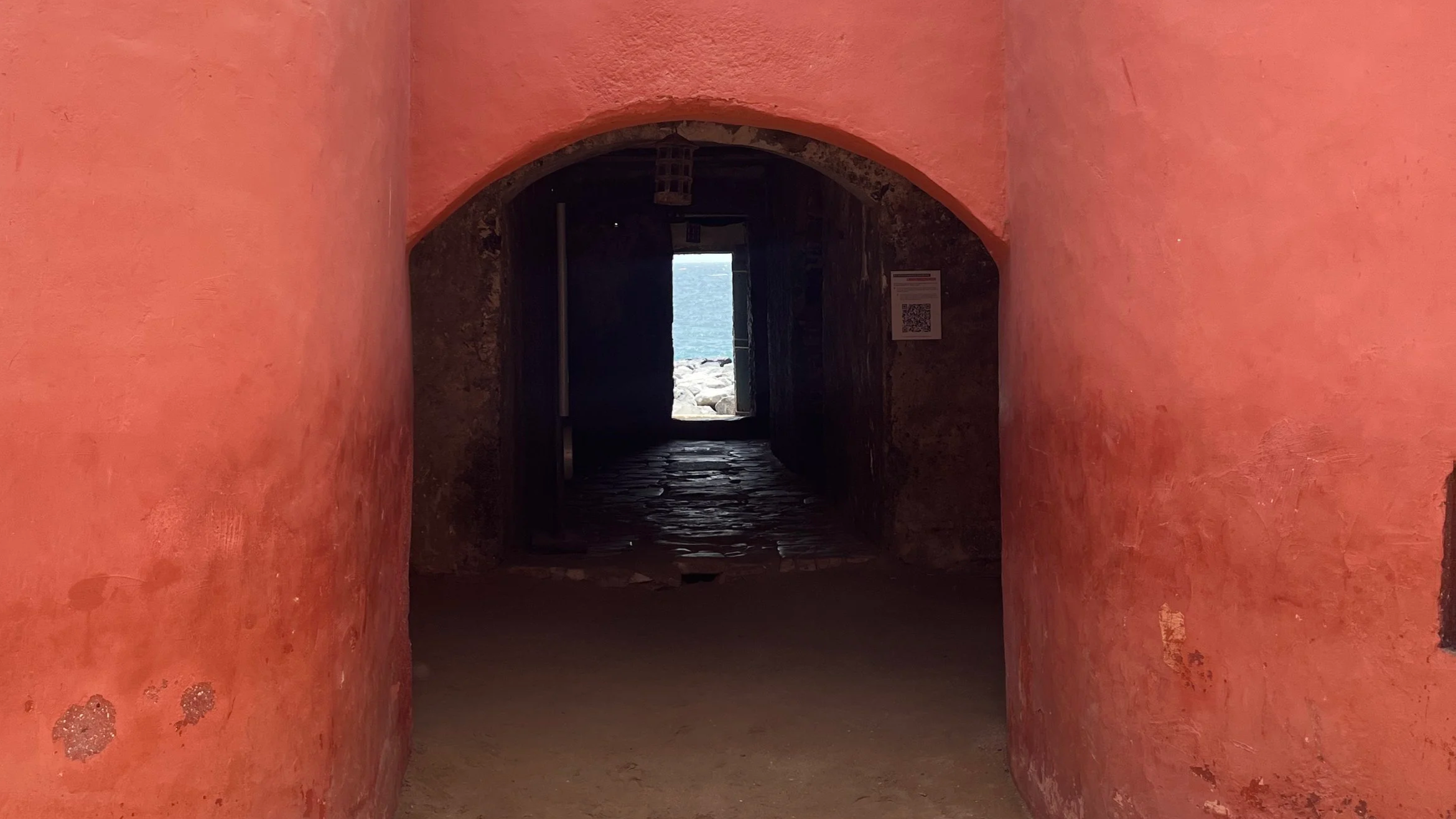
As a point of departure, Williams retraced the transatlantic voyage of the ship The Phillis that trafficked Phillis Wheatley Peters from her birthplace of Senegambia to Boston in 1761, gathering volcanic basalt stones from along the coast of Dakar, including Gorée Island, a colonial-era trading post. The stones are arranged in a quincunx to form a cosmogram that aligns with the sun and other celestial bodies during the summer and winter solstices to trace the nautical routes between Boston, London, and Senegambia, mapping the transatlantic networks that shaped the lives of Wheatley Peters and those who lived in New Guinea, and more broadly the landscape of Boston.
The second intervention consists of a braided installation suspended from the façade of a marketplace built in the 18th century. The suspended sculpture transforms the historic structure in response to its symbolic and economic functions as a place of commerce and its origins as a site marked by legacies of subjugation. Unfolding across public spaces near the waterfront and drawing on the material and conceptual languages of land art and post-Minimalist sculpture, the two interventions compel audiences to consider the maritime economies that shape the city and the histories that hum beneath the surface of the soil.